Profile Picture

Software Engineer

Open to full-time opportunities

Contact

Introduction

Full Stack Projects

Nexus Auto

A mobile app for car owners to keep track of their car's maintenance and repairs.

React NativeTypeScriptConvexExpoTailwind

Hostly

A full-stack SaaS platform for managing events, ticket sales, guest lists, and SMS campaigns.

Next.jsTypeScriptStripeConvexTailwind

Website Projects

Skills

🎨 Frontend
  • React
  • Next.js
  • TypeScript
  • Progressive Web Apps (PWA)
⚙️ Backend
  • Node.js
  • REST APIs
  • GraphQL
  • Webhooks
🗄️ Databases
  • MySQL
  • SQL
  • NoSQL
  • Convex
🔌 Integrations
  • OpenAI
  • Google APIs
  • Stripe
  • Twilio
  • Clerk
🧰 Tools & Platforms
  • Git
  • GitHub
  • CI/CD
  • Vercel
  • Google Cloud Platform
  • AWS
🧩 Design
  • Figma
  • Tailwind UI
  • Shadcn UI
  • CSS
  • Bootstrap

About Me

Profile picture of David
👨‍💻 Experience & Expertise
  • 5+ years in web development: Extensive experience in creating robust, efficient, and scalable web solutions.
  • Enterprise and startup experience: Comfortable working with large, long-lived codebases as well as fast-moving, early-stage products.
🎓 Education
  • Western Governors University — Bachelor of Science in Computer Science
  • University of California, Berkeley Extension — Coding Bootcamp
  • University of Florida — Master in International Business & Bachelor of Science in Finance

Actively seeking my next role

💬 Let's connect.

Contact

📱 (305) 613-4423

✉️ davidanusontarangkul@gmail.com

Hiring Details
  • Location: Las Vegas, NV (Open to remote / relocation)
  • Work Auth: U.S. Citizen / Authorized for any employer
  • Availability: Available to start immediately

Engineering Philosophy

What is your proudest build?

My proudest achievement is developing Nexus Auto, a mobile-first car maintenance platform built with React Native and Convex. I took the initiative to create this app to solve a real-world problem I faced personally, taking it from a blank text editor to a fully functional tool that I continue to use daily.

Transitioning from a background primarily in web development, I pushed myself to master the nuances of the mobile ecosystem. This project allowed me to gain deep expertise in React Native and Expo, specifically handling complex challenges like stack routing, asynchronous device storage, and the end-to-end deployment process for the App Store.

What are your long-term goals?

My long-term ambition is to lead products from 0 to 1 and through successful scaling phases. I am driven by the challenge of building impactful applications, utilizing everything I’ve learned about scalable architectureto ensure they are as efficient as they are innovative.

I thrive in environments where I can express my entrepreneurial creativity through code, treating every feature with the same level of ownership as my own projects. Ultimately, I aim to be a thought leader in the tech space, leading teams of engineers who are genuinely excited by the mission and building a culture where technical excellence drives meaningful growth.

How are you using AI in your development?

I view AI as a powerful force multiplier, a tool that significantly accelerates my development velocity without compromising my role as the final architect. I utilize AI agents within Cursor to generate boilerplate and iterative code rapidly, allowing me to focus on high-level system design and complex logic.

However, I am acutely aware that AI can make mistakes. I review every line of code generated to ensure it meets my standards for security and performance. Beyond just writing code, I use a rotating stack of models, including Gemini, ChatGPT, and Grok to talk through architectural questions and explore nuanced technical contexts that aren't easily found in documentation. This multi-model approach ensures I'm always leveraging the best tool for the specific task at hand.

What drives you?

I am driven by the intellectual challenge of engineering. To me, encountering a complex bug or an architectural roadblock isn's a setback, it's a motivator. I find immense satisfaction in the process of overcoming those challenges and finding creative, elegant solutions that provide real-world impact.

My commitment to constant improvement is evidenced by my unconventional path: I went back to earn a second Bachelor's degree in Computer Sciencewhile already working in the field, simply because I wanted a deeper understanding of the fundamentals. Whether I'm at the library studying distributed systems or experimenting with the latest tech innovations, I am always pushing to be a more effective engineer who can build better, more scalable software.

Reading List

I regularly visit the library to sharpen my technical craft and mental models. Here are a few books that have fundamentally shaped how I think about code, design, and building products.

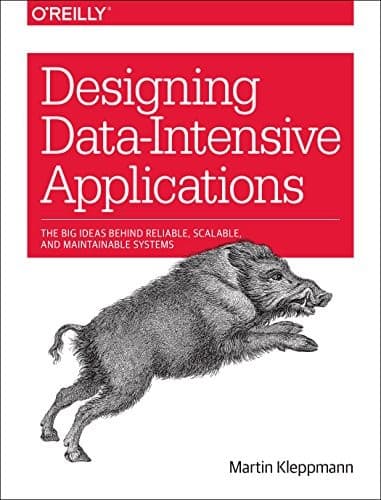
Book cover: Designing Data-Intensive Applications

Designing Data-Intensive Applications

Martin Kleppmann

Key Takeaway

Deepened my understanding ofdistributed systems architecture, specifically the trade-offs between consistency and availability in the face of network partitions. It provided a framework for deciding when to prioritize immediate data accuracy versus high system uptime based on specific business needs.

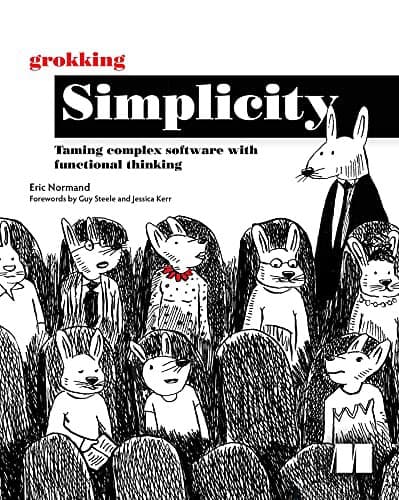
Book cover: Grokking Simplicity

Grokking Simplicity

Eric Normand

Key Takeaway

Strengthened my approach tofunctional programming by mastering the separation of side effects (actions) frompure logic (calculations) and state (data). This mental model allows me to build deeply decoupled systems where the core logic is highly testable and predictable, regardless of the UI or infrastructure.

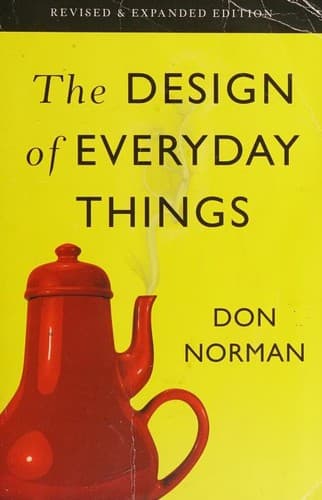
Book cover: The Design of Everyday Things

The Design of Everyday Things

Don Norman

Key Takeaway

Refined my frontend development philosophy: I believe every element on a screen should have a logical purpose and placement. If a user has to ask for documentation to navigate a feature, it needs improvement. I strive to build intuitive interfaces.

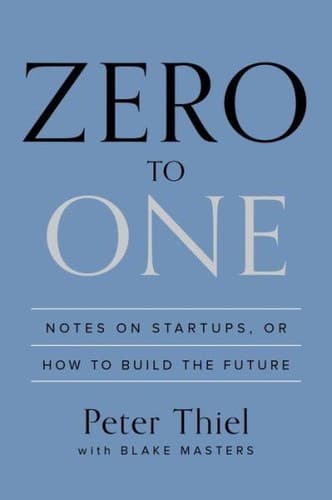
Book cover: Zero to One

Zero to One

Peter Thiel

Key Takeaway

Informed my entrepreneurial mindset toward software. It reminds me to build things that are 10x better than the status quo and to focus on creating unique value in the marketplace.

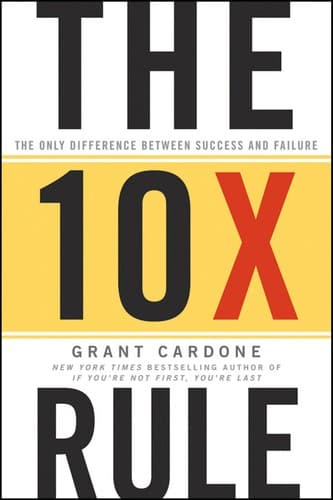
Book cover: The 10X Rule

The 10X Rule

Grant Cardone

Key Takeaway

Becoming a 10X Engineer requires a level of discipline. I bring this relentless work ethic to every project, staying obsessed with constant self-improvement to stay ahead of the curve in this competitive field.